Phoenix Irrigation Checklist After Monsoon Rain
Check rain delays, drip lines, sprinklers, and lingering wet spots after a Phoenix monsoon storm before restarting your normal irrigation routine.
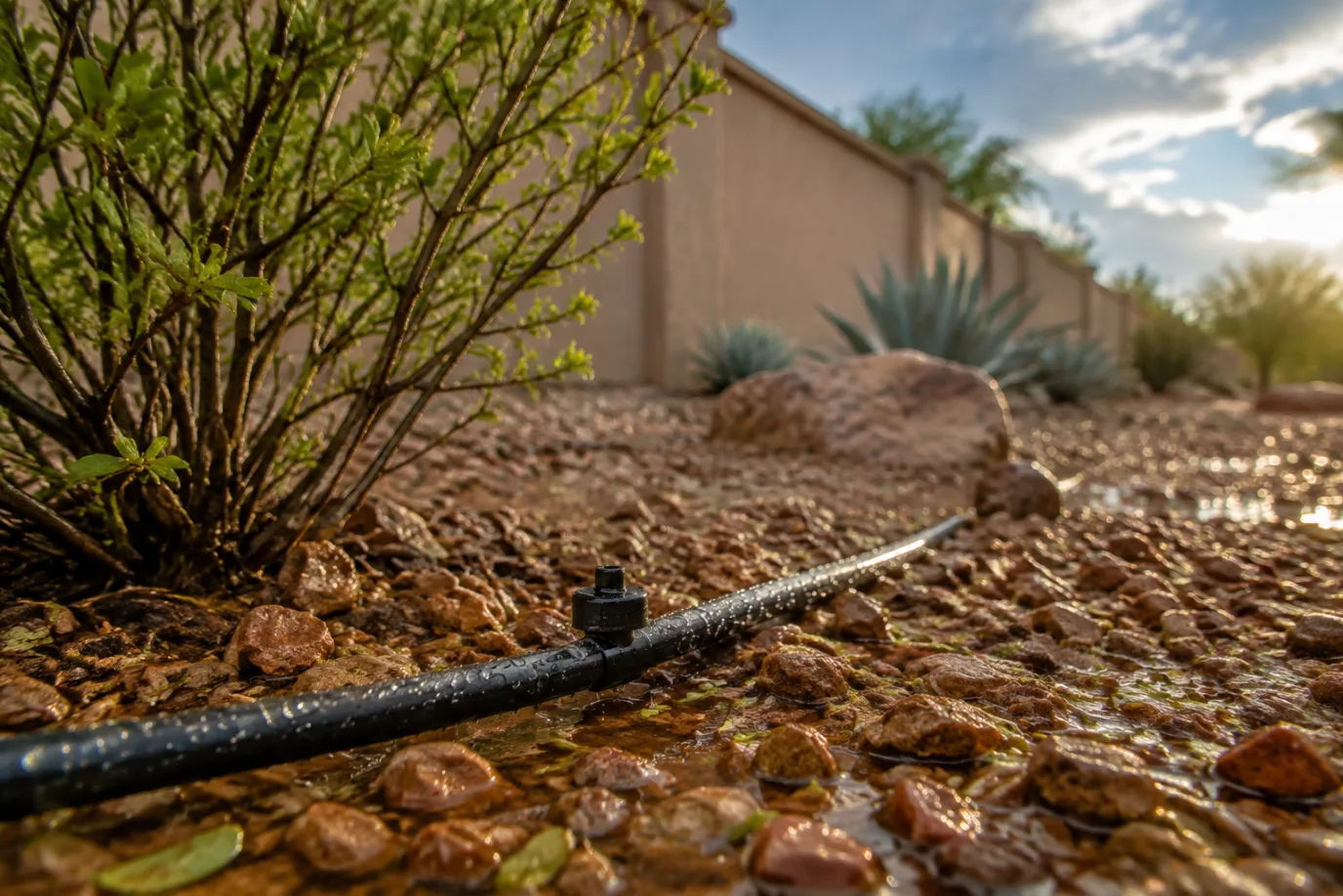
A storm has passed, the gravel is damp, and the irrigation controller is due to start again tonight. Should you let it run? Start with a short inspection instead of guessing from the street. This checklist helps Phoenix and Laveen homeowners document what changed and give a repair crew useful information if a problem remains.
1. Wait until the yard is safe to inspect
Begin only after the storm has passed and access is safe. View the property from a clear walkway first. Stay away from damaged electrical equipment, fallen utility lines, unstable branches, and flooded equipment. Arrange professional help for those hazards instead of treating them as a routine irrigation check.
Before moving anything, photograph washed-out gravel, exposed tubing, shifted sprinkler heads, and persistent pools. Include a wide photo showing the location and a closer photo showing the symptom. Avoid digging around buried utilities just to follow a wet patch.
2. Check the controller before the next scheduled cycle
Record the displayed date, time, active program, and any rain-delay setting. Compare them with your saved schedule or a photo taken before the storm. If settings look unfamiliar, consult the model’s manual; do not assume every controller handles a power interruption the same way.
AMWUA’s watering resources help homeowners adjust irrigation to seasonal conditions and troubleshoot systems. Rainfall is a reason to reassess watering, but a wet surface alone does not tell you how much moisture reached the roots. Review the planted areas separately and use soil conditions to guide the decision.
Review AMWUA’s landscape watering guide and troubleshooting resources.
3. Walk the drip areas with the system off
Use a simple zone list: front shrubs, side bed, backyard trees, and any other separate circuits. Note where tubing is newly exposed, an emitter appears displaced, or debris is covering access to a valve box. Do not pull on a line to find out where it goes.
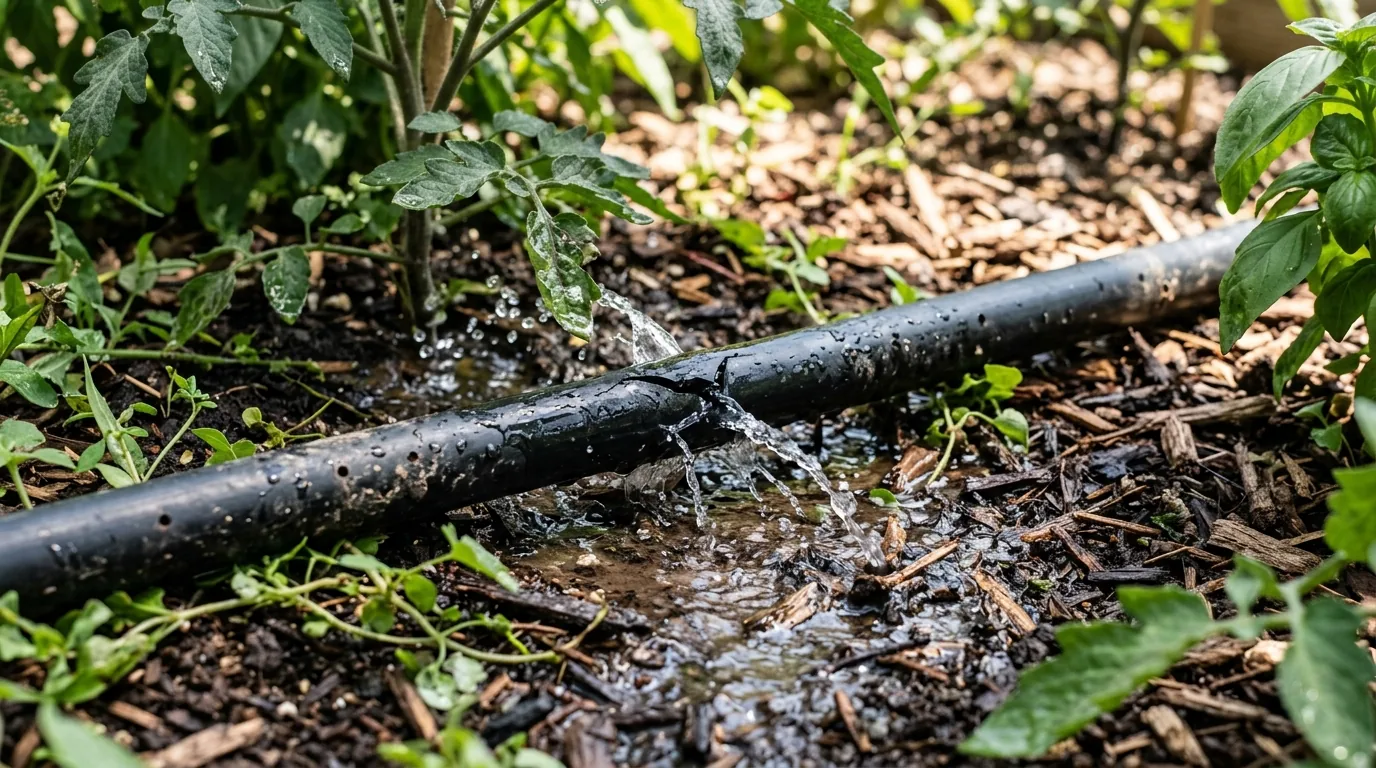
A wet spot just after rain is not proof of a broken pipe. Mark its location and compare it with nearby ground over time. Record whether it persists while the irrigation is off and whether it changes during a later controlled test. That sequence is more useful than a photo with no timing information.
4. Test only when a brief run is appropriate
If the area is safe and no obvious break is discharging water, run one zone at a time briefly while you watch it. Stop when you see a problem; a test should not become an extra full watering cycle. Look for spraying from a drip line, a missing emitter, an obstructed sprinkler, or water hitting pavement instead of planting areas.
Write down the zone number and the exact location before moving to the next zone. If a zone continues flowing after you stop it at the controller, stop troubleshooting and contact an irrigation professional. Use a clearly identified irrigation shutoff only if you know how to operate it safely.
For persistent leak symptoms, see our drip irrigation leak guide.
5. Separate a repair request from a drainage question
Tell the crew whether pooling appears only after rainfall, only during irrigation, or in both situations. Ask for diagnosis before approving replacement parts. A controller adjustment, a damaged fitting, and a grading problem call for different work; the visible puddle alone does not establish which one you have.
For a repair request, send your zone notes, photos, controller model, and access details. Include whether the system is currently off and whether plants on that circuit have another water source. This helps the visit focus on restoring appropriate watering, not just making a wet spot disappear.
6. Confirm the follow-up plan
After a repair or schedule change, ask which zone was changed, what was tested, and when to review the settings again. Keep the notes with the controller photo. Recheck the affected area during the next scheduled run, and report recurring symptoms with their timing.
Arrange irrigation diagnostics in Phoenix.
Arrange irrigation diagnostics in Laveen.
See the broader Phoenix seasonal maintenance checklist.
Frequently asked questions
Should I turn off all irrigation after a storm?
Review actual rainfall, soil moisture, and each planting area before deciding on a rain delay. One blanket schedule may not suit turf, trees, and shrubs equally.
How can I distinguish a leak from rainwater?
Record where the wet spot is, whether it persists with irrigation off, and whether it changes when the relevant zone runs. These observations help a professional diagnose the source; pooling alone is not enough.
Need Professional Assistance?
If you suspect an underground pipe break, need lawn maintenance, or want to rework an inefficient drip zone, tell us what the property is doing now. We will review the site and define the work before pricing it.
Ready for Stress-Free Landscaping?
Book a seasonal maintenance plan, irrigation diagnostic, or custom gravel grading with our Laveen-based crew.
Recommended Guides
Need a Property Recommendation?
Tell us whether the priority is repair, recurring maintenance, or a new installation. We will review the property details before proposing work.