Switching Landscape Contractors: A Checklist for Phoenix Property Managers
Plan a commercial landscape contractor change with a condition record, clear service boundaries, irrigation access, open repair list, and first-month review.
A smooth landscape contractor change starts with a written handoff: confirm when responsibility changes, document the existing condition, transfer authorized site access, and agree on the first month’s priorities. Replacing a vendor without those details can leave both the new crew and the property manager unsure who owns an unfinished task.
Use this operational checklist for Phoenix apartments, HOA common areas, office properties, and retail centers. Have your authorized management team confirm the current agreement’s notice and transition requirements before setting dates. The steps below organize the landscape handoff; they do not interpret your contract.
Before setting the start date: define what is changing
Write down the reason for the change in observable terms. “North entrance remains littered after service” is more useful than “poor quality.” Separate repeated routine-service problems from repairs that were proposed but never authorized. The new contractor needs to know which problems belong to the recurring scope and which require additional work.
Confirm the outgoing provider’s last service date and the incoming provider’s first planned visit through the property’s authorized decision-maker. Identify who responds to irrigation problems during any gap. Do not assume the new provider has accepted responsibility before access, scope, and scheduling are confirmed.
Use one handoff sheet
Record the property name and address; management and on-site contacts; maintained-area map; final and first planned service dates; access-transfer owner; controller and shutoff locations; open repairs; first-month priorities; vendor-document status; and the person responsible for each next action. Put a date beside unresolved items so they remain visible.
Download the commercial landscape transition checklist.
Walk the property and record its starting condition
Photograph the entrances, shared paths, turf edges, desert beds, parking islands, and known problem areas before the handoff. Label photos with the date and location. Note overgrowth, damaged plants, existing leaks, bare areas, displaced gravel, and accumulated debris. Include areas that cannot yet be inspected.
Use this record to agree on the initial scope. A documented startup cleanup should not be confused with recurring maintenance, and an inherited irrigation fault should not be presented as damage caused by the new crew. Ask the incoming provider to flag conditions that require further diagnosis before a repair price can be confirmed.
Confirm boundaries for apartments, HOAs, offices, and retail
Apartment communities: mark shared grounds, resident-only spaces, gates, pet areas, and access near occupied units. Identify the on-site contact and notice process for any work that affects resident routes.
HOAs: distinguish association-maintained grounds from private yards, neighboring frontage, and areas maintained by another party. Provide the community map and the management or board approval path for extras.
Offices and strip malls: mark entrances, storefront approaches, loading areas, parking islands, and frontage. Record tenant access hours, delivery constraints, and any shared areas outside the agreement.
Review apartment landscape maintenance scope.
Review HOA common-area landscape maintenance scope.
Transfer irrigation information through the site contact
Provide controller locations, zone labels or maps if available, authorized access arrangements, known shutoffs, and an open fault list. Record the current schedule before changes are made, then have the appropriate provider review settings against actual site conditions. Avoid copying one generic schedule across every planting area.
Tell the incoming provider who may approve diagnostics and repairs, how urgent problems should be reported, and which tasks require a separate proposal. Transfer access credentials through your established secure process rather than publishing them in a bid package or general inquiry form.
Make the first month manageable
Before the first visit, agree on the maintained areas, site contact, access, vendor requirements, and priority concerns. At the first visit, review the starting-condition record and identify unexpected limitations. During the first weeks, use a short open-item list to distinguish routine work, approved repairs, and recommendations awaiting a decision.
At the end of the first month, walk the same inspection route used at the handoff. Compare results with the accepted standards and startup scope. Decide which concerns have been resolved, which need adjustment, and which require a separately approved improvement. This is a proposed review framework, not a guarantee that every inherited problem will be resolved within 30 days.
Use the Phoenix commercial landscape maintenance inspection checklist.
Avoid three common handoff gaps
Unclear access: a scheduled visit does not solve a locked controller or unknown gate contact. Assign responsibility for access before the first visit. Unpriced restoration: a new monthly fee does not automatically include accumulated cleanup or replacement planting. Identify startup work. Unowned repairs: an open leak report is not the same as an approved repair. Name the decision-maker and next action.
Preparing to request a new proposal?
Bryson Lawn Service can review your property, priorities, existing scope, and vendor requirements before confirming service fit and preparing a proposal. Start with the contact person, property location, and main concerns. Add a proposal deadline or target start date if known; the team will confirm the site-walk arrangements with you.
Request a commercial landscape maintenance site walk.
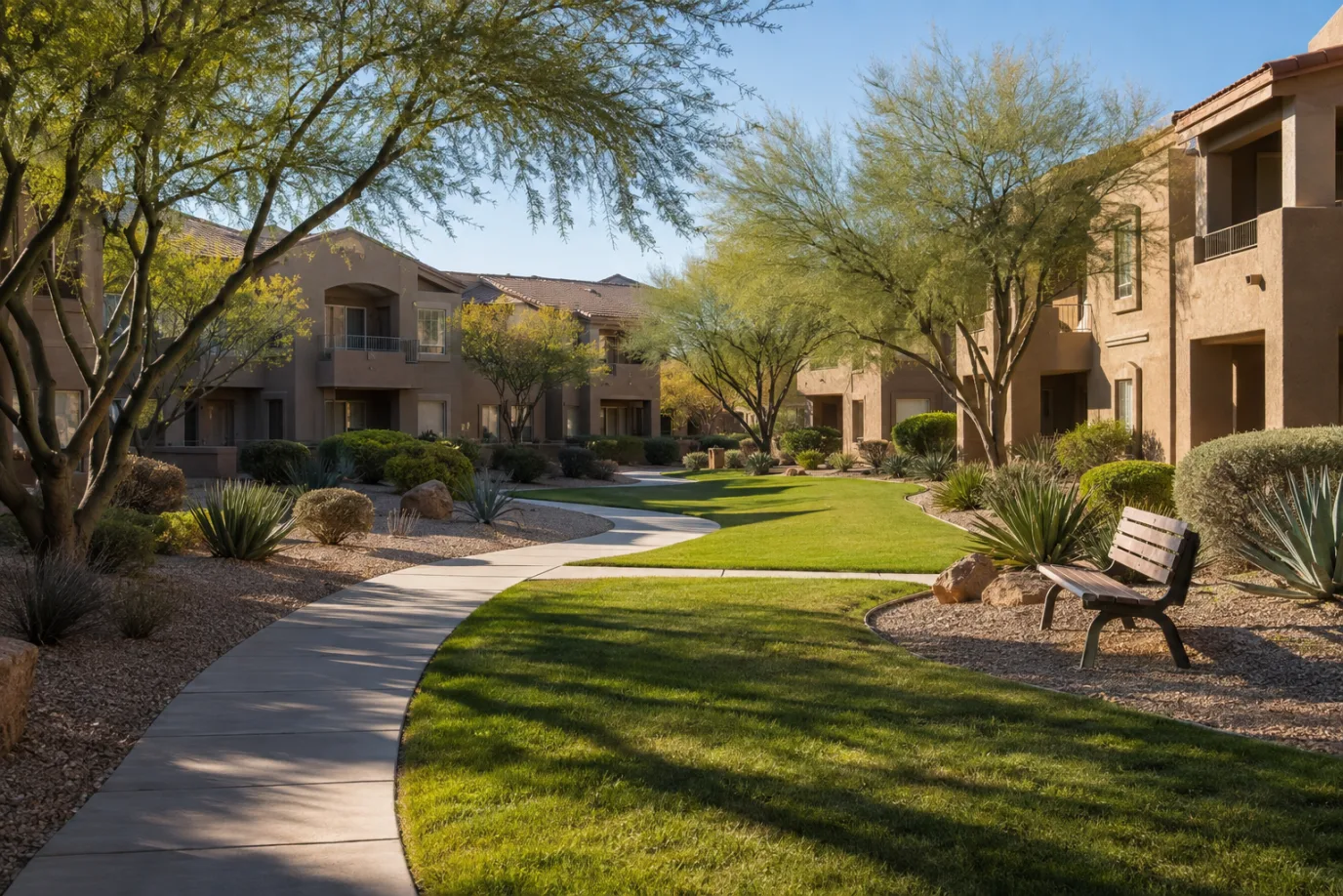
Illustration note: the article image is a representative Phoenix-style common-area setting, not a documented Bryson customer property.
Frequently asked questions
What should I give the incoming landscape contractor?
Provide the maintained-area map, site contact, starting-condition photos, authorized access arrangements, irrigation records if available, open repairs, and the agreed scope and dates.
Does changing contractors fix all existing landscape problems?
No. Accumulated cleanup, plant replacement, and irrigation faults may need separately approved startup or repair work. Document the starting condition and confirm responsibilities.
Do I need a start date before contacting Bryson?
No. You can begin with the property location and priorities. If you have a bid deadline or target transition date, include it so the team can review scheduling and service fit.
Need Professional Assistance?
If you suspect an underground pipe break, need lawn maintenance, or want to rework an inefficient drip zone, tell us what the property is doing now. We will review the site and define the work before pricing it.
Plan your commercial property walkthrough
Bring your current scope, property concerns, access requirements, and bid timeline. We will review the site before proposing work.
Recommended Guides

Need a Property Recommendation?
Tell us whether the priority is repair, recurring maintenance, or a new installation. We will review the property details before proposing work.