Commercial landscape maintenance in Phoenix
Landscape care for offices, retail centers, apartment communities, and HOA common areas in Phoenix, South Phoenix, and Laveen. Request a commercial site walk to define maintenance standards, irrigation responsibilities, access, and a property-specific proposal.
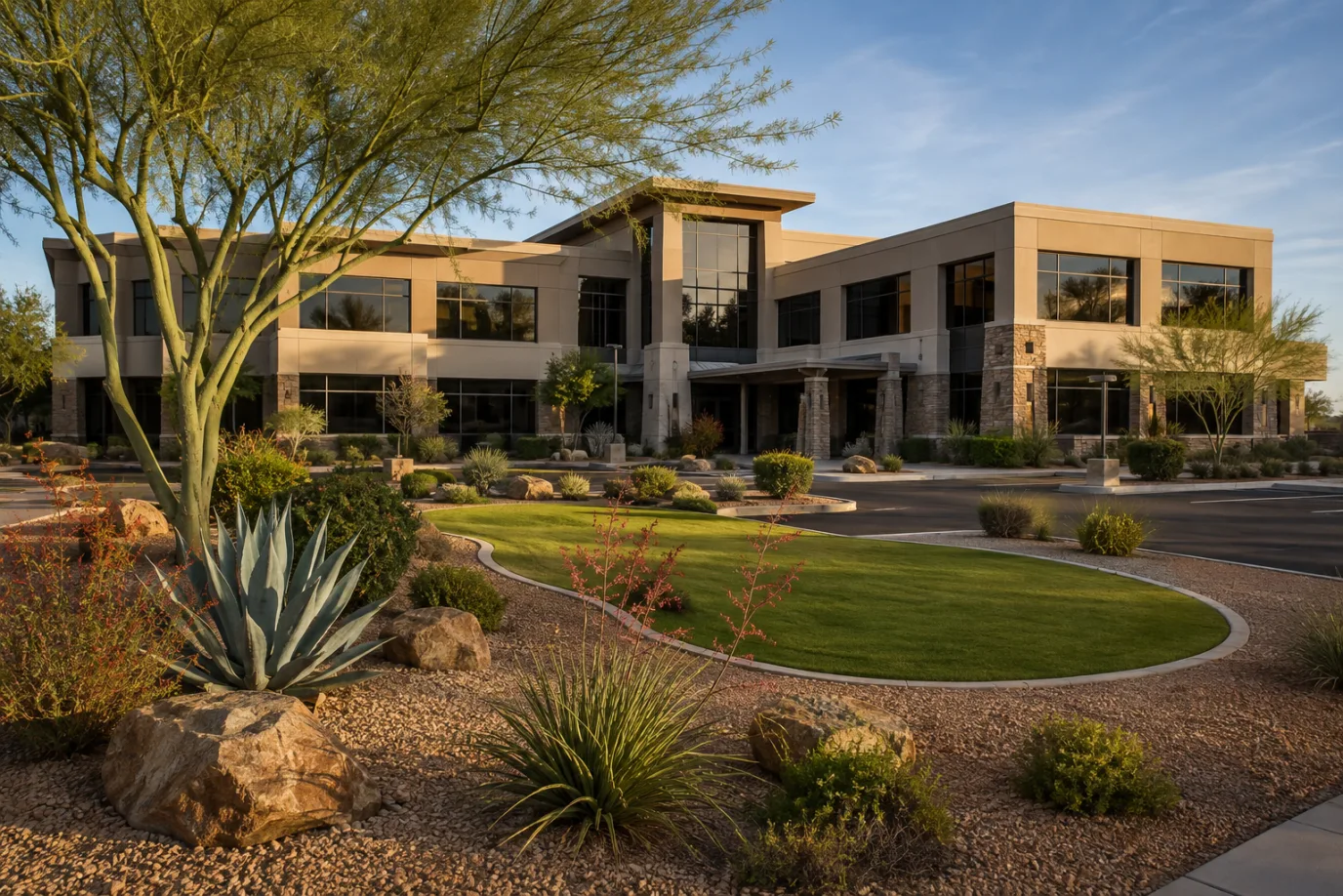
The lowest maintenance number can become the most expensive operating problem.
Vague scopes create predictable gaps: irrigation is treated as an extra until plants decline, pruning happens without a clearance standard, litter remains because nobody owns it, and enhancements are proposed without separating them from routine work. A useful contract makes those responsibilities visible.
Scope drift
If turf, desert areas, shrubs, parking edges, retention areas, and seasonal work are not defined separately, expectations change faster than the invoice.
Reactive irrigation
Leaks and coverage problems become expensive when the maintenance crew notices symptoms but no inspection, authorization, or repair path is established.
Inconsistent property presentation
Entries, pedestrian paths, tenant areas, monument signs, and high-visibility corners need standards—not just a visit frequency.
A maintenance scope organized by zones, standards, and accountability.
The final program is built after a site walk. These are the operating categories we use to uncover what the property actually needs.
Turf and edge standards
Define mowing, edging, trimming, clipping cleanup, seasonal turf expectations, and the appearance required at high-visibility areas.
- Bermuda and seasonal turf
- Walk and curb edging
- Hardscape cleanup
Desert beds and weed control
Set expectations for gravel grooming, weed response, debris, volunteer growth, and the difference between routine care and restoration work.
- Rock and bed appearance
- Routine weed management
- Cleanup thresholds
Shrubs, trees and clearances
Establish pruning intent, sightline and pedestrian clearance, seasonal timing, and which tree work requires a separate qualified scope.
- Shrub form and access
- Sign and walkway visibility
- Separate tree-service needs
Irrigation observation and repair path
Define routine visual checks, leak reporting, controller responsibility, emergency contacts, and the authorization process for repair work.
- Visible leak reporting
- Coverage concerns
- Repair approvals and documentation
Litter, access and site coordination
Account for gates, tenant hours, loading areas, parking, events, pets, locked controllers, and who receives service communication.
- Site-contact protocol
- Work-hour constraints
- Priority area scheduling
Enhancements separated from maintenance
Keep replacements, seasonal color, irrigation upgrades, rock, planting, and renovation proposals visible as planned improvements—not hidden contract assumptions.
- Budgetable alternates
- Phased improvements
- Capital versus routine work
Phoenix commercial properties need a heat, water, and access plan.
A retail center may need entries and monument signs completed before customer traffic builds. An apartment community must coordinate gates, residents, pets, parking, pools, and emergency access. An office or industrial property may prioritize pedestrian clearance, clean arrival zones, and irrigation work that avoids business hours. Those operating conditions belong in the proposal.
Phoenix heat also compresses the window for some work and makes irrigation failures more consequential. A useful maintenance relationship includes a fast route from observation to decision: what the crew found, whether plant health or property safety is at risk, what is included, and what requires approval.
How Bryson builds a commercial maintenance proposal
The first goal is scope clarity. Price comparisons only become useful after every bidder is solving the same property problem.
01 / Property and procurement intake
Collect site contacts, property type, current scope, standards, access, insurance, reporting, proposal format, and decision timeline.
02 / Site walk by operating zone
Review turf, desert areas, shrubs, trees, irrigation, litter, entrances, pedestrian routes, parking edges, retention areas, and problem locations.
03 / Scope-based proposal
Define routine work, frequencies or service expectations, exclusions, alternates, repair authorization, startup needs, and communication.
04 / Mobilization and review rhythm
Confirm contacts, access, schedules, priority areas, known deficiencies, and how performance or improvement decisions will be reviewed.
Request a commercial landscape maintenance site walk.
Commercial pricing depends on landscape area, property type, standards, irrigation responsibility, access, reporting, seasonal expectations, and the deficiencies being inherited. A site walk protects both sides from an incomplete scope.
Download the commercial site-walk checklist (.txt)- Property address and type
- Current contract or bid scope, if available
- Site map, plans, or approximate landscape area
- Known irrigation and plant-health issues
- Access, parking, tenant, event, and work-hour constraints
- COI and vendor onboarding requirements
- Walk-through, question, and proposal deadlines
Straight answers about the service
What commercial property types does Bryson maintain?+
Bryson can evaluate offices, retail, multifamily, HOA common areas, industrial or flex properties, institutional sites, and other managed landscapes. Fit depends on location, scope, access, and service requirements.
Can you provide a certificate of insurance?+
The booking process allows commercial contacts to identify COI requirements. Provide the required limits, certificate holder, endorsements, and vendor instructions so eligibility and timing can be confirmed before work is scheduled.
Is irrigation repair included in commercial maintenance?+
Observation and reporting can be defined in the routine scope. Repair labor, parts, upgrades, and emergency response should be clearly addressed in the proposal and authorization process rather than assumed.
Can you bid from an existing RFP or scope?+
Yes. Send the complete scope, maps, exhibits, addenda, insurance requirements, walk-through information, question deadline, and proposal format. Bryson may recommend clarifications where the documents leave important responsibilities undefined.
How often should a Phoenix commercial property be serviced?+
Frequency depends on landscape type, season, property standard, irrigation, growth, litter, traffic, and budget. We recommend a service plan after walking the site rather than assigning one frequency to every area.
Can you handle landscape enhancements in addition to maintenance?+
Yes. Irrigation corrections, planting, rock, turf, renovation, and other enhancements can be scoped separately so the property can budget and approve them without blurring routine contract work.
Plan your next step
Practical guides to help you prepare for this service.
What Affects Commercial Landscape Maintenance Costs in Phoenix?
Plan a Phoenix commercial landscaping budget by separating recurring care, startup work, irrigation repairs, and seasonal extras before requesting bids.
Commercial LandscapingSwitching Landscape Contractors: A Checklist for Phoenix Property Managers
Plan a commercial landscape contractor change with a condition record, clear service boundaries, irrigation access, open repair list, and first-month review.
Commercial LandscapingCommercial Landscape Maintenance Checklist for Phoenix
A practical inspection checklist for Phoenix property managers: entrances, irrigation, landscape beds, service records, and repair approvals.
Build a complete property-care plan
Ready for a property-specific answer?