Build a Phoenix landscape for the exposure it has—not the inspiration photo it copied.
Bryson turns a landscape goal into a site-specific installation scope. We account for reflective heat, irrigation zones, hardscape transitions, access, drainage, plant maturity, and the maintenance the property will need after the crew leaves.
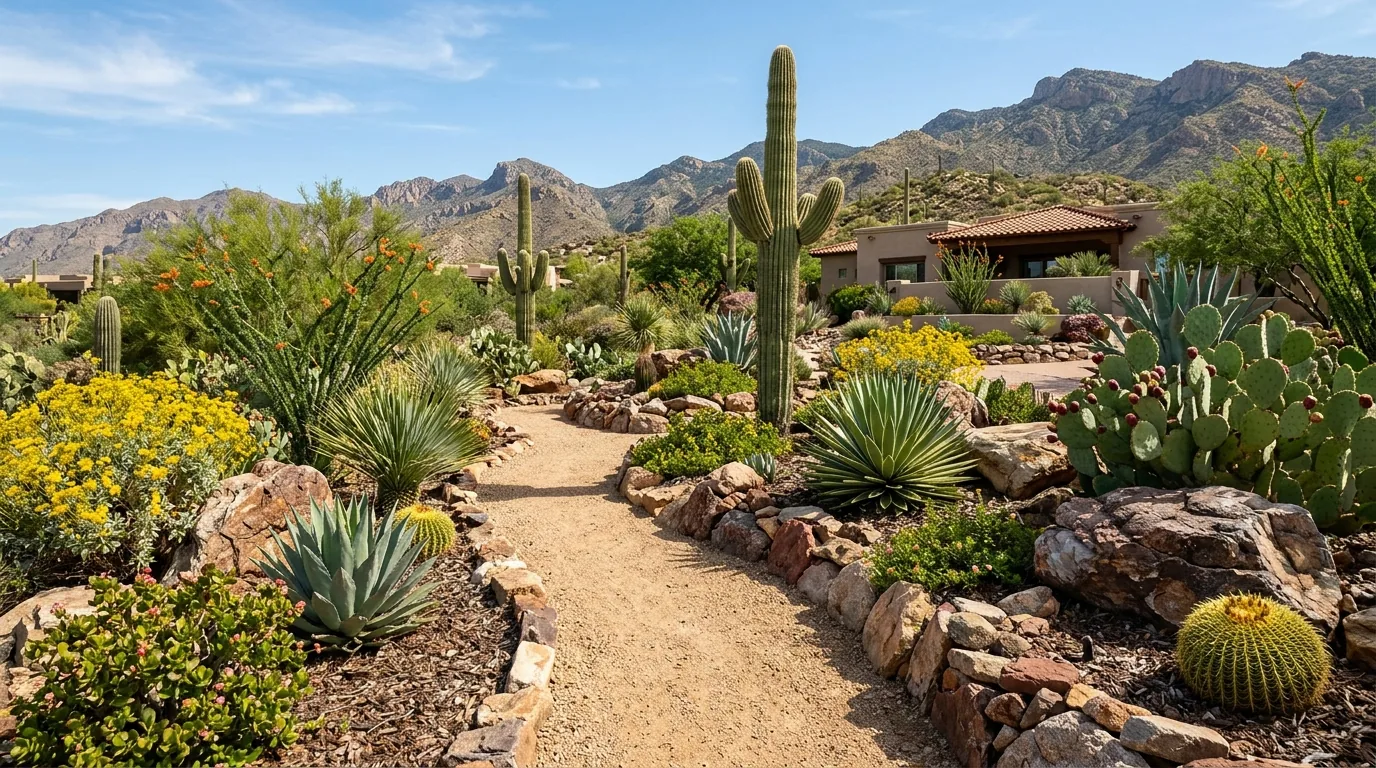
Phoenix exposes every weak installation decision.
A plant placed against a west wall can receive intense reflected heat. A beautiful new bed can fail when it shares a zone with plants that need different watering. Decorative rock can become a maintenance problem when grading and edge conditions are ignored. Good installation work begins by designing around those consequences.
Microclimates within one property
Walls, glass, pavement, shade, roof runoff, and orientation create temperature and moisture differences that should shape plant and material placement.
Water added after the design
Plant groupings and turf areas must be compatible with available zones, pressure, controller capacity, and practical maintenance access.
No plan for the finished property
Mature size, sightlines, pedestrian clearance, service access, litter, leaf drop, and pruning needs affect homes and managed properties differently.
Every visible finish depends on work you may never see again.
We organize the project so underground work, grading, borders, materials, planting, and testing happen in the right order.
Existing-condition plan
Document what remains, what is removed, where crews and material can enter, and which conditions may affect cost or sequencing.
- Access and staging
- Existing irrigation and utilities
- Protection of retained elements
Grading and drainage decisions
Review slopes, low points, downspout discharge, hardscape edges, and finish elevations before new materials lock those conditions in.
- Positive drainage
- Material containment
- Transition elevations
Irrigation design and installation
Align valves, zones, delivery methods, and controller needs with the proposed planting and turf plan.
- Hydrozoning by plant need
- Drip and spray distribution
- Testing before cover
Planting for exposure and maturity
Select and place trees, shrubs, accents, and groundcovers with attention to water needs, reflected heat, mature size, views, and clearance.
- Desert-adapted palettes
- Shade and focal planting
- Spacing for maintenance
Rock, boulders, turf and edges
Install finish materials with the preparation, depth, transitions, and containment needed for a clean, maintainable result.
- Decorative rock
- Natural or artificial turf
- Boulders and defined beds
Commercial landscape improvements
Scope entry upgrades, tenant-facing areas, worn common spaces, irrigation modifications, and phased enhancements around site operations.
- Office and retail entries
- Multifamily common areas
- Phased capital improvements
A Phoenix installation is a water-management project even when water is not the visual focus.
The plant palette, shade strategy, rock coverage, turf area, and soil preparation all influence how much irrigation the property needs and how forgiving the landscape will be during extreme weather. We group plants with compatible needs and make irrigation decisions while the ground is open—not after finish materials are installed.
For commercial and multifamily sites, the layout must also work around pedestrians, vehicles, signage, visibility, litter, vendor access, and the expectations of tenants or residents. Those operational details belong in the scope, not in a change order after work begins.
A Phoenix installation process with fewer expensive surprises
The sequence protects the work already completed and gives you decision points before the least reversible steps.
01 / Define the outcome
Clarify who uses the space, what must improve, what maintenance is acceptable, and which constraints cannot move.
02 / Build the site scope
Evaluate access, removals, grades, drainage, water, materials, planting, turf, approvals, and potential phases.
03 / Confirm choices and sequence
Resolve selections, allowances, exclusions, alternates, schedule dependencies, and owner responsibilities in writing.
04 / Install and commission
Complete work in order, test affected irrigation, review the finished scope, and hand off establishment and care guidance.
Give us the information that turns a vision into an accountable proposal.
The more complete the property brief, the fewer assumptions have to be priced into the work. Commercial requests can attach bid instructions, plans, and insurance requirements through the follow-up process.
- Property type and occupied-use constraints
- Approximate area and current photos
- Existing elements to remain
- Drainage or irrigation concerns
- Preferred material and planting direction
- Approval, procurement, or bid deadlines
- Desired phasing and investment range
Straight answers about the service
What is included in a Phoenix landscape installation estimate?+
The estimate is based on the accepted scope and may include preparation, removal, grading, irrigation, materials, planting, turf, cleanup, and other defined work. Items not included should be identified as exclusions or alternates.
Can Bryson work from an existing landscape plan?+
Yes. Provide the complete plan set, specifications, plant schedule, irrigation information, approval status, and any bid instructions so constructability and scope can be reviewed.
Can you design a lower-maintenance Phoenix yard?+
Yes, but low maintenance still requires deliberate plant spacing, irrigation access, material containment, weed planning, and periodic care. We discuss the maintenance target during planning.
How are plants selected for Phoenix heat?+
Selection considers exposure, reflected heat, water needs, mature size, cold tolerance, soil and drainage conditions, function, and the visual direction of the property.
Can installation happen while a commercial property remains open?+
Often, with a plan for staging, pedestrian and vehicle separation, noise, dust, irrigation shutdowns, work hours, and communication with the site contact.
Do you also maintain landscapes after installation?+
Bryson provides residential lawn care and commercial landscape maintenance. Ongoing care should be discussed during installation planning so plant and turf decisions match the intended service level.
Plan your next step
Practical guides to help you prepare for this service.
How Much Does Landscaping Cost in Phoenix?
Learn what affects landscaping cost in Phoenix, how installation and maintenance estimates are built, and what helps you get an accurate quote.
Landscaping ServicesWhere to Start Looking for a Landscaping Company
Learn where to start looking for a landscaping company in Phoenix, how to compare local contractors, what to ask, and which warning signs to avoid.
Landscaping ServicesTypes of Landscaping Services for Phoenix Homes
Learn the main types of landscaping services Phoenix homeowners use, from lawn care and irrigation repair to xeriscaping, cleanup, and design.
Protect the installation after it is built
Ready for a property-specific answer?