Phoenix Landscape Maintenance Checklist by Season
Use this seasonal Phoenix landscape maintenance checklist for lawns, desert plants, irrigation, weeds, gravel, cleanup, and monsoon preparation.
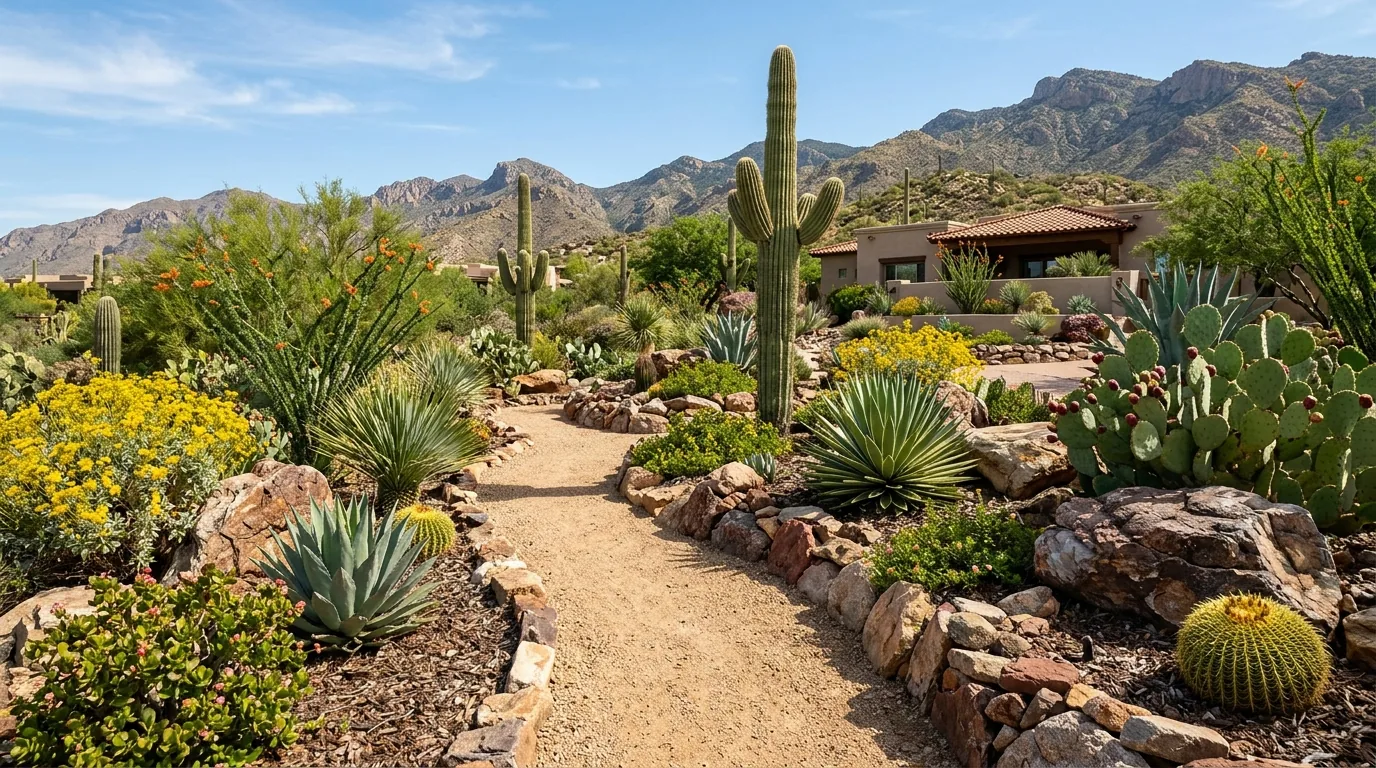
A useful Phoenix landscape maintenance checklist changes with the season. Bermuda turf, optional winter ryegrass, desert trees, shrubs, gravel, and irrigation zones do not need the same work at the same time. The schedule should also respond to heat, rain, wind, frost, plant establishment, and what the property is used for.
Use this guide to organize routine lawn and desert landscape maintenance without turning the calendar into a rigid rule. The best plan combines regular observation with defined service standards, then adjusts watering and timing to the actual property.
Quick answer: what does Phoenix landscape maintenance include?
A practical maintenance plan includes turf care where applicable, selective plant pruning, weed control, gravel and bed grooming, irrigation observation, seasonal schedule changes, debris cleanup, and early reporting of safety or water problems. Active lawns may need weekly or biweekly attention, while simplified desert landscapes may fit monthly visits plus seasonal and storm-related work.
Monthly Phoenix Landscape Maintenance Checklist
A short property walk each month can catch problems before they become a failed plant, flooded bed, damaged hardscape, code concern, or large cleanup.
Run each irrigation zone and look for leaks, blocked emitters, tilted heads, overspray, runoff, or a controller left on the wrong program.
Check turf color, growth, dry areas, mower scalping, edge quality, and whether seasonal grass is transitioning as expected.
Inspect trees and shrubs for dead, broken, crossing, or obstructive growth without automatically shearing every plant into the same shape.
Remove weeds before they set seed, then review bare areas, displaced gravel, and places where irrigation or runoff encourages new growth.
Clear leaves, seed pods, litter, and storm debris from beds, drains, walkways, equipment, and sight lines included in the service scope.
Look for unsafe limbs, thorns near paths, hidden trip hazards, blocked address numbers, and plant growth touching roofs, walls, or equipment.
Phoenix Landscaping Calendar by Season
Phoenix maintenance is easier to plan in five practical weather periods. Exact timing moves from year to year, so use plant condition and the forecast alongside the calendar.
| Season | Primary focus | Typical maintenance priorities |
|---|---|---|
| Winter (December–February) | Cool-weather inspection and selective care | Reduce irrigation for established plants as weather allows; monitor frost damage before pruning; maintain optional ryegrass; clean leaves and seed pods; plan spring repairs and installations. |
| Spring (March–April) | Growth, weeds, and irrigation reset | Test every irrigation zone; address weeds early; prepare Bermuda for active growth; selectively prune appropriate plants; refresh displaced gravel; repair borders and drainage before summer heat. |
| Hot, dry period (May–June) | Water delivery and heat readiness | Verify deep, targeted watering; inspect emitters and sprinkler coverage; protect new plants with establishment care; maintain active Bermuda; avoid unnecessary stress from aggressive pruning. |
| Monsoon period (July–September) | Storm response and fast growth | Clear drainage paths; monitor wind-damaged limbs; reset washed gravel; remove storm debris; watch for irrigation breaks and weeds; keep paths, signs, and access points open. |
| Fall transition (October–November) | Recovery and winter decisions | Adjust irrigation as temperatures change; decide whether to overseed Bermuda; complete cleanup and planting when conditions fit; inspect the year’s wear; schedule corrective work before winter. |
Make Irrigation the Center of the Maintenance Plan
Water deeply and adjust seasonally
The City of Phoenix recommends matching watering to plant type, season, weather, and soil instead of leaving one controller schedule in place all year. Established desert plants generally need less frequent watering than turf or newly installed plants.
Respond to rain, heat, and failures
Pause or reduce unnecessary watering after meaningful rain, then inspect for runoff and erosion. During hot weather, confirm that water reaches the active root area before simply adding more days to the schedule.
The official City of Phoenix landscape watering guidelines explain how to match irrigation to the property. If you see wet gravel, dry turf bands, missing emitters, or a zone that will not operate, review our guide to drip irrigation leak detection or request Phoenix irrigation repair.
Maintain Lawn and Desert Areas as Different Systems
Bermuda and optional winter ryegrass
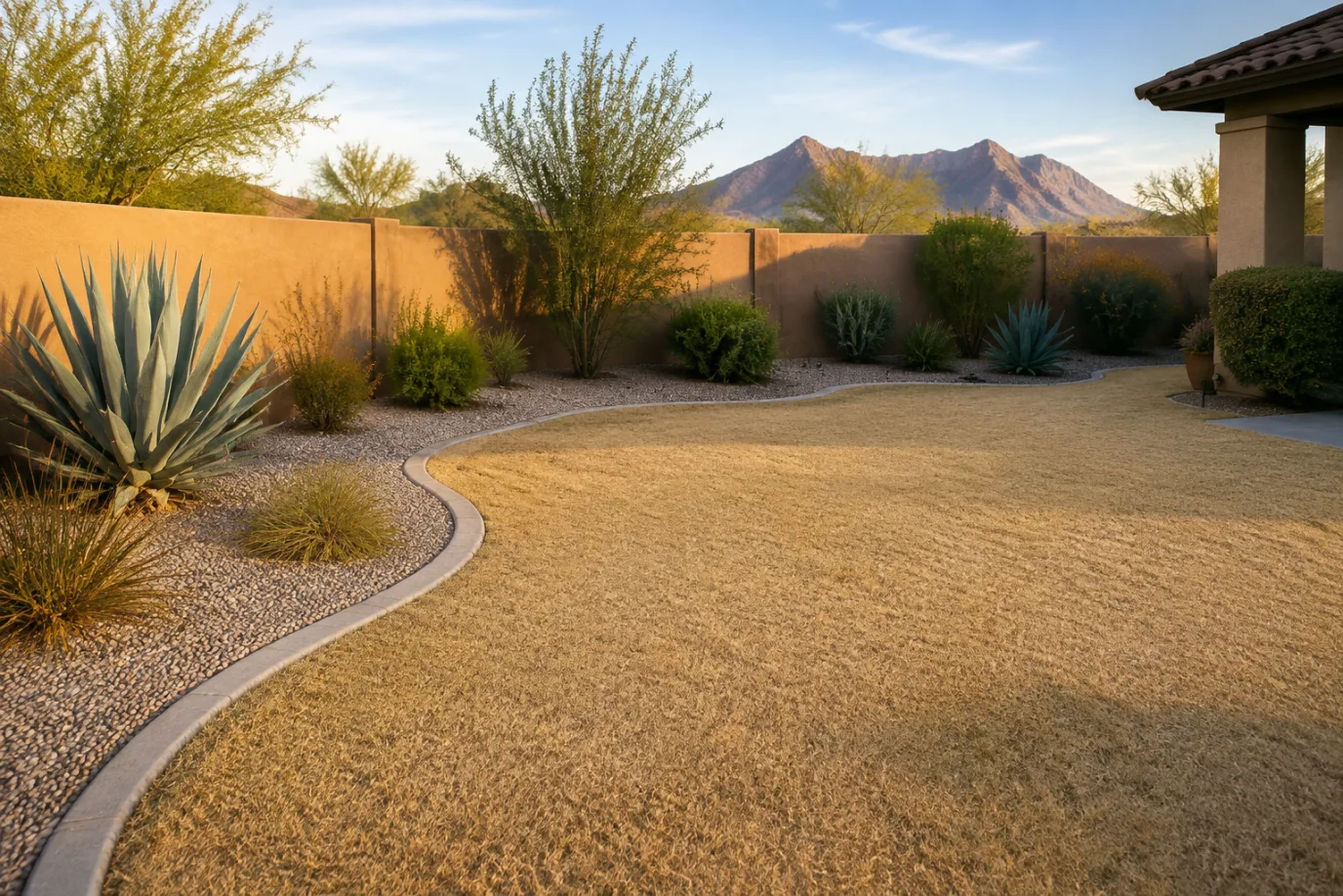
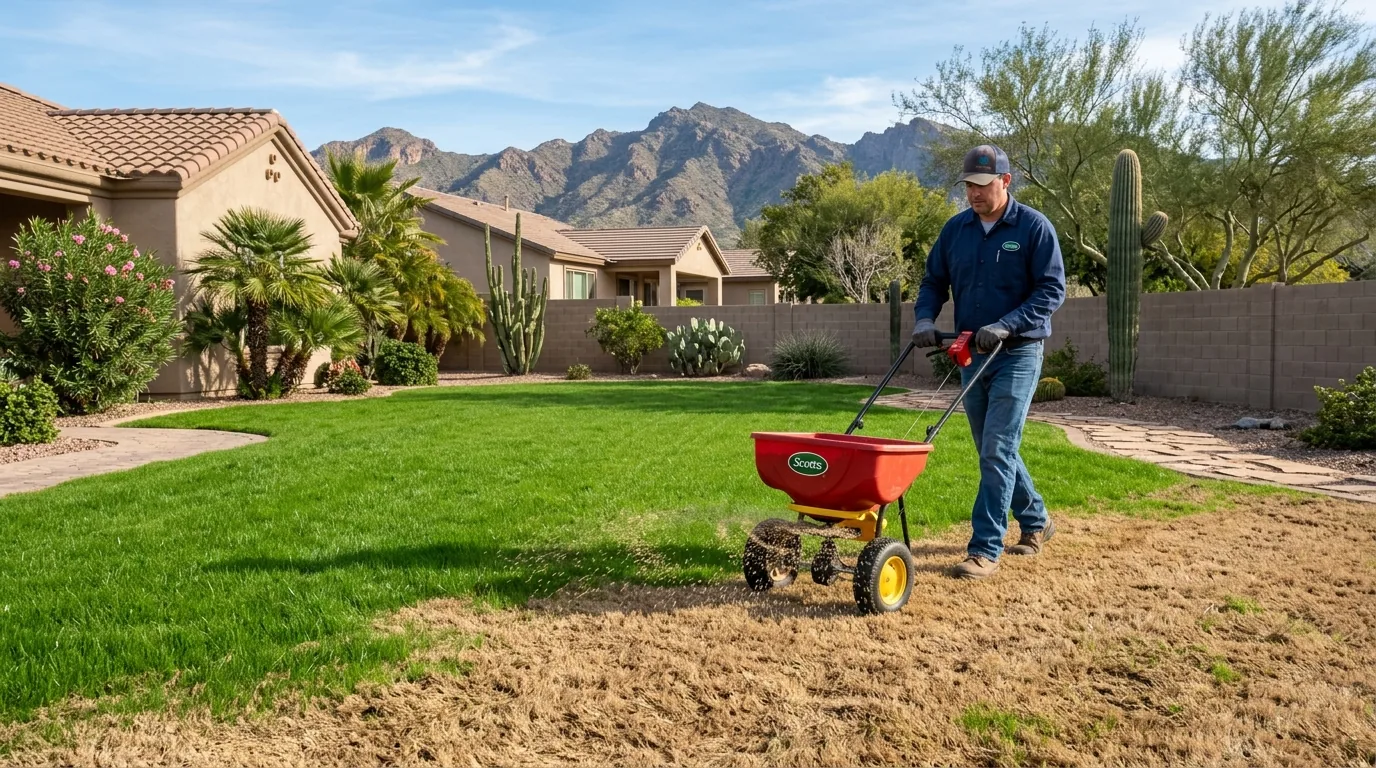
Active turf needs mowing, edging, clipping cleanup, measured irrigation, and attention to coverage and transition timing. A lawn that is thin because of failed sprinklers will not be corrected by mowing more often. Bryson's Laveen lawn care service defines mowing and edge standards separately from repairs and corrective cleanup.
Desert trees, shrubs, gravel, and beds
Desert landscaping still needs weed control, selective pruning, emitter checks, gravel grooming, drainage cleanup, and space for plants to reach a healthy mature form. The City of Phoenix maintains a useful collection of desert landscape and plant resources.
How Often Should Landscaping Be Maintained in Phoenix?
Frequency should follow growth, appearance standards, water risk, and property use. These planning cadences are a starting point, not a substitute for inspecting the site.
Actively growing lawn
Often weekly or biweekly
Growth rate, turf type, season, desired finish, mower, irrigation, and the amount removed per visit determine the schedule.
Desert shrubs and small ornamental trees
Inspect monthly; prune selectively
Pruning timing and frequency depend on species, bloom cycle, location, clearance needs, and condition—not a fixed calendar alone.
Irrigation system
Quick monthly run-through plus seasonal reset
Test zones more often after storms, freezes, construction, plant failure, unusual water use, or visible wet and dry areas.
Gravel, weeds, and general cleanup
Monthly or as conditions require
Rain, wind, leaf drop, nearby vacant land, irrigation leaks, and neglected edges can create a faster cleanup cycle.
Commercial or high-visibility property
Scope-based recurring visits
Traffic, litter, sight lines, reporting, service windows, turf, irrigation, and tenant expectations should be defined in the maintenance plan.
Add a Monsoon and Safety Check to Routine Service
After strong wind or heavy rain, keep people away from hanging limbs, leaning trees, downed lines, flooded electrical areas, and unstable structures. Routine landscape crews can clear ordinary debris within scope, but hazardous tree, utility, structural, or electrical conditions require the appropriate qualified specialist or emergency provider.
Once the property is safe, inspect drainage paths, washed rock, exposed drip tubing, clogged emitters, broken branches, displaced edging, standing water, and new weed growth. Photograph damage before cleanup when an owner, manager, HOA, or insurer may need documentation.
Turn the Checklist Into a Clear Maintenance Scope
Write down what each visit should include: turf areas, edge standards, pruning boundaries, weed method, gravel and bed cleanup, hardscape blowing, irrigation observations, debris removal, locked areas, pets, service-day communication, and separately priced repairs. This prevents “landscape maintenance” from meaning something different to the owner and the crew.
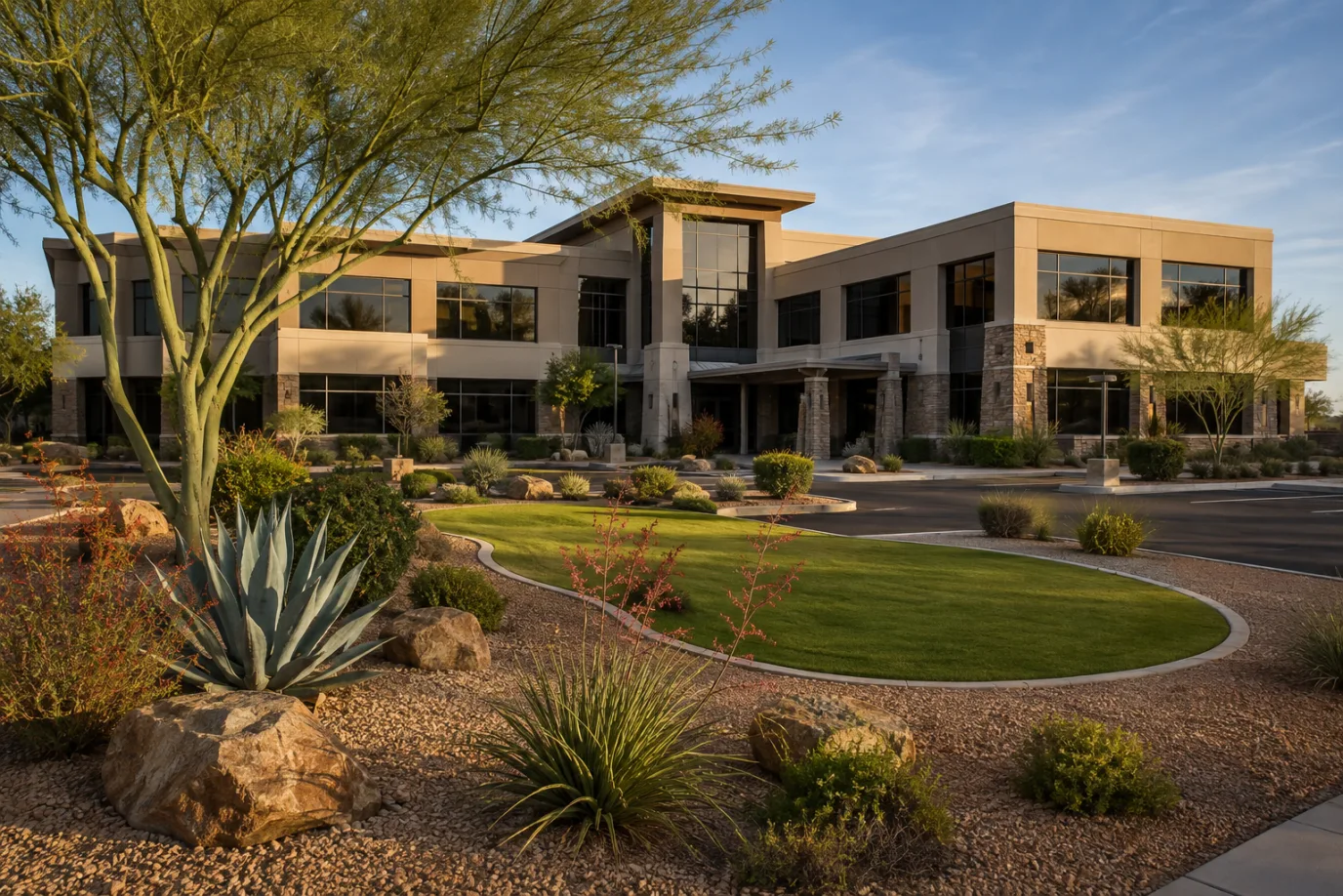
Commercial properties also need service windows, tenant and pedestrian considerations, reporting, proposal requirements, and a response process for leaks or storm damage. See Bryson's approach to commercial landscape maintenance in Phoenix or review the broader types of landscaping services before requesting an estimate.
Frequently Asked Questions About Phoenix Landscape Maintenance
How often should landscaping be maintained in Phoenix?
Actively growing lawns often need weekly or biweekly service, while simplified desert landscapes may fit monthly maintenance plus seasonal and storm-related work. Plant growth, irrigation, weeds, leaf drop, property use, and the desired appearance should determine the final schedule.
What is included in routine landscape maintenance?
A defined plan may include mowing and edging, selective shrub care, weed control, gravel and bed grooming, light debris cleanup, irrigation observations, and reporting of problems. Repairs, major tree work, heavy cleanup, new materials, and installation should be listed separately unless the agreement includes them.
How often should I change my irrigation schedule in Phoenix?
Review the controller at least seasonally and after meaningful rain, freezes, extreme heat, plant establishment, or a visible water problem. The correct frequency depends on plant type, weather, soil, root depth, emitter or sprinkler output, and current condition.
Is desert landscaping maintenance-free?
No. Desert landscapes generally use less water and may need less frequent service than turf, but they still require weed control, selective pruning, drip-system checks, gravel grooming, drainage cleanup, and replacement of failed plants or emitters.
What landscaping work should be done after a Phoenix monsoon storm?
Address safety first. Stay away from hanging limbs, leaning trees, downed lines, unstable structures, and flooded electrical areas. Once safe, inspect drainage, storm debris, broken branches, displaced gravel and edging, exposed drip tubing, standing water, and new irrigation leaks.
Need Professional Assistance?
If you suspect an underground pipe break, need lawn maintenance, or want to rework an inefficient drip zone, tell us what the property is doing now. We will review the site and define the work before pricing it.
Ready for Stress-Free Landscaping?
Book a seasonal maintenance plan, irrigation diagnostic, or custom gravel grading with our Laveen-based crew.
Recommended Guides

Need a Property Recommendation?
Tell us whether the priority is repair, recurring maintenance, or a new installation. We will review the property details before proposing work.