HOA Landscape Maintenance in Phoenix
A community landscape proposal should make common-area responsibilities easy for managers and boards to understand. Bryson evaluates HOA grounds in Phoenix, South Phoenix, and Laveen to define routine care, irrigation reporting, seasonal work, and separately approved improvements.
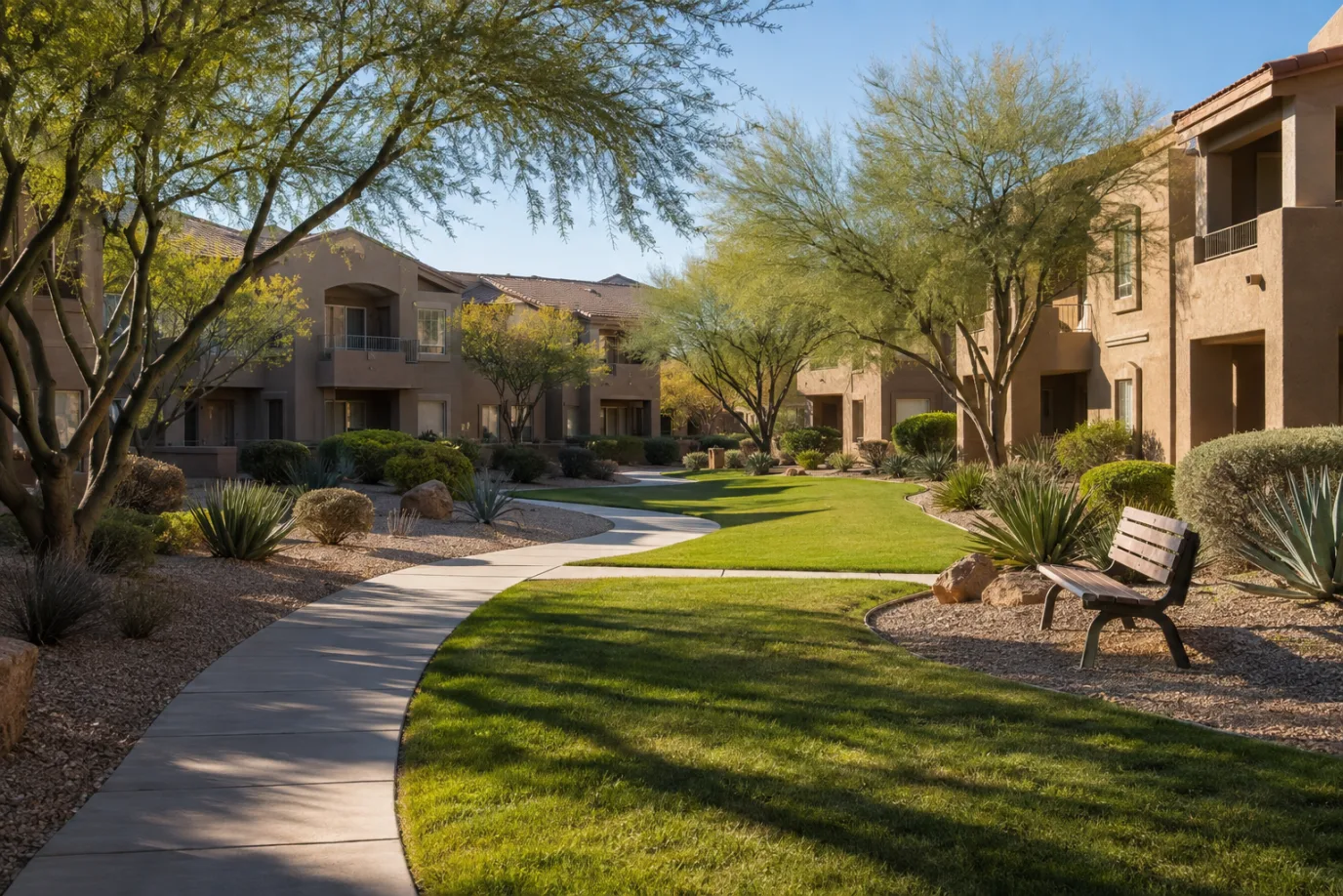
Start with the common-area boundaries and approval process.
An association may have shared entrances, landscape strips, paths, turf, and planting beds alongside individually maintained lots. Bidders need the same map and responsibilities to price comparable work. The manager and board also need a clear distinction between recurring care and projects awaiting approval.
Unclear common-area responsibilities
Mark what the association maintains, what belongs to individual owners, and what another party handles. Resolve uncertain boundaries before treating them as part of a recurring contract.
Board expectations that are hard to compare
A visit frequency does not define the condition expected at entrances, paths, or turf areas. Describe the standards and seasonal work so proposals can be evaluated on the same basis.
Repairs mixed with improvement requests
A reported irrigation failure, a plant replacement, and a proposed landscape redesign require different decisions. Keep open repairs and optional enhancements visible as separate items.
Shared grounds care with a defined routine and approval path.
The final scope reflects the community map, landscape condition, property standards, vendor requirements, and the association’s decision process.
Community entrances and frontage
Identify the entrances, signs, frontage, and landscape strips included in the scope. Set expectations for vegetation clearance, litter, and the appearance of planted areas.
Shared turf and pathways
Define mowing, edging, clipping cleanup, and the landscape areas beside common paths. Identify seasonal turf choices as explicit scope decisions rather than assumptions.
Desert beds and shrubs
Specify routine weed response, debris cleanup, gravel appearance, and pruning intent. Keep restoration and plant replacement separate where they exceed recurring care.
Irrigation reporting and authorization
Name the controller contact and the person authorized to approve investigation or repair. Distinguish routine observation from parts, labor, and larger corrections.
Site coordination and resident concerns
Set a management contact for access and service questions. Use location-specific observations so resident reports can be reviewed against the agreed scope.
Seasonal work and enhancement planning
Identify proposed planting, rock, turf, or irrigation improvements as separately priced items. Give the board a clear scope and assumptions for each decision.
Give the board a consistent view of what needs a decision.
Use a short open-item register alongside the service scope. Record the location, reported condition, whether the item is routine work or a proposed extra, the responsible contact, and the next action. This helps management distinguish unfinished maintenance from work that has not yet been approved.
A budget discussion should separate the recurring contract, known startup work, and optional improvements. If a bidder has not inspected an area or confirmed an equipment condition, ask that the uncertainty be stated. An unverified allowance should not be presented as a fixed repair price.
Seasonal appearance choices belong in the plan. For example, optional winter turf and future planting changes can affect both maintenance work and irrigation oversight. Confirm the association’s preferences and actual property conditions before including those items in the proposal.
From a community scope to a proposal the board can compare
A useful bid package describes both the maintained grounds and how the association will make service decisions.
01 / Assemble the common-area brief
Provide the map, current scope, site contact, priorities, vendor requirements, and board or management decision timeline.
02 / Walk the maintained areas
Review entries, shared turf, beds, paths, irrigation access, boundaries, and inherited conditions that may require startup work.
03 / Define the proposal
Separate routine responsibilities, seasonal items, exclusions, repair approvals, and optional improvements. Resolve unclear scope items before comparing prices.
04 / Confirm the review process
Agree on contacts, access, service expectations, and how management will review open items and requests for additional work.
Request an HOA common-area landscape review
Send the association name, management contact, location, common-area map, existing scope, and the bid timeline. Bryson will review the community’s requirements and property conditions before confirming service fit and preparing a proposal.
Download the commercial site-walk checklist (.txt)- Association and management contact
- Common-area map and boundaries
- Current contract or bid scope
- Priority resident or board concerns
- Irrigation access and known problems
- Approval and vendor requirements
- Walkthrough date and proposal deadline
Straight answers about the service
Does HOA maintenance include individual homeowners’ yards?+
Not unless those areas are explicitly identified in the accepted scope. The association should provide a common-area map and clarify boundaries before requesting bids.
Can you provide a proposal for board review?+
Bryson can review an association’s scope and proposal requirements. Send the required format, decision timeline, site map, vendor requirements, and any questions that need to be answered for the board.
Are irrigation repairs part of the recurring fee?+
The accepted proposal determines what is included. Routine observation, diagnosis, parts, repair labor, and upgrades should be described clearly, with an approval process for work outside the recurring scope.
Can landscape enhancements be priced separately?+
Yes. Planting, rock, turf, irrigation corrections, and other improvements can be evaluated as separate scopes so the association can review them independently from routine care.
Do you meet our association’s insurance requirements?+
Provide the required limits, certificate instructions, endorsements, and vendor documents for review. Eligibility and documentation must be confirmed before service is scheduled; this page does not certify compliance with a particular association’s requirements.
Plan your next step
Practical guides to help you prepare for this service.
What Affects Commercial Landscape Maintenance Costs in Phoenix?
Plan a Phoenix commercial landscaping budget by separating recurring care, startup work, irrigation repairs, and seasonal extras before requesting bids.
Commercial LandscapingSwitching Landscape Contractors: A Checklist for Phoenix Property Managers
Plan a commercial landscape contractor change with a condition record, clear service boundaries, irrigation access, open repair list, and first-month review.
Commercial LandscapingCommercial Landscape Maintenance Checklist for Phoenix
A practical inspection checklist for Phoenix property managers: entrances, irrigation, landscape beds, service records, and repair approvals.
Plan common-area maintenance and supporting services
Ready for a property-specific answer?